
Transponder key programming is the process of pairing the small chip sealed inside your car key with your vehicle’s onboard computer so the engine recognizes the key as authorized. Without that digital match, even a perfectly cut key will turn in the ignition yet leave the engine silent. This is the part of modern car key work that hardware-store copies simply cannot handle.
You slide the key in, the dashboard lights flicker, and nothing happens. Many Tucson drivers run into this exact wall after buying a spare key online or having a blank cut at a big-box store. The blade fits, but the car’s security system refuses to start. The solution is professional transponder key programming, performed by a trained automotive locksmith who can read your vehicle’s security data and write a new key that the computer trusts. In this guide, our team at Budget Locksmith of Tucson breaks down how the technology works, why expertise matters, and how to make the right call for your vehicle. Keep reading to see what really happens inside that little plastic head.
What Lives Inside a Transponder Key
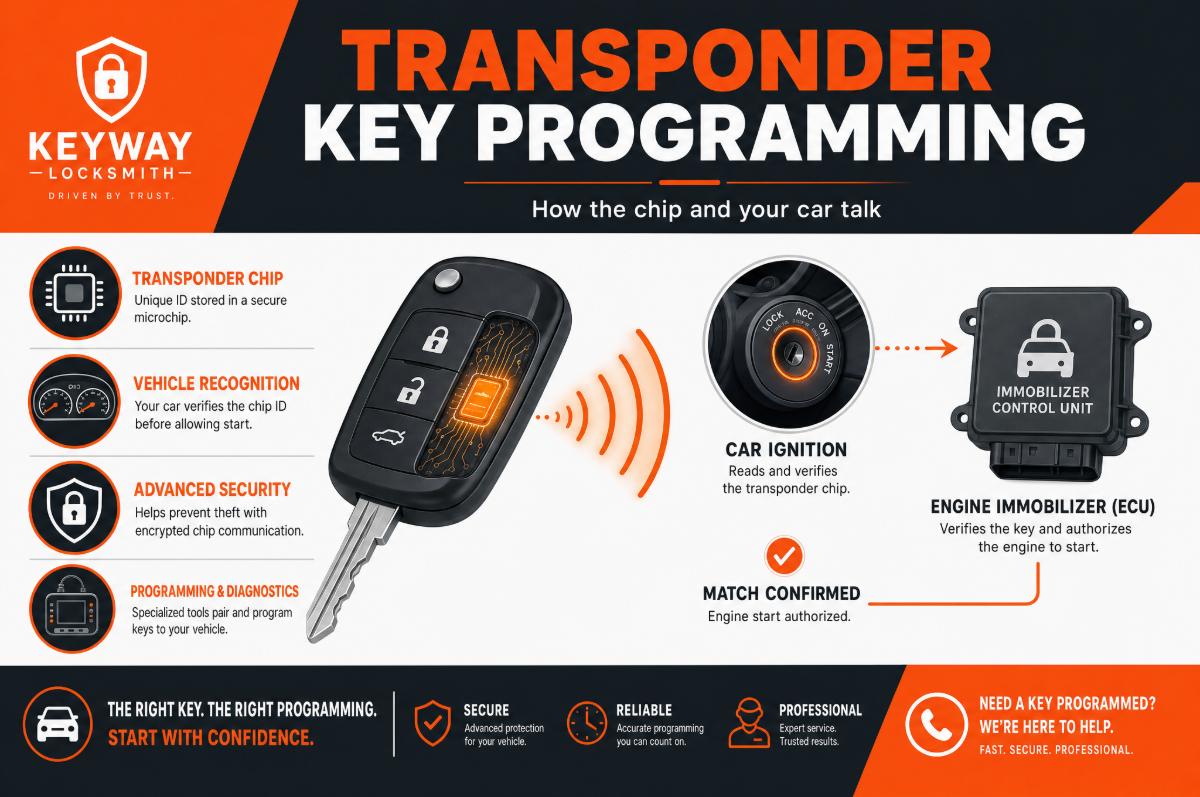
A transponder key looks ordinary, but the plastic head hides a passive RFID chip with no battery of its own. When you turn the key, a coil of wire around the ignition cylinder sends out a low-power radio field. That field energizes the chip, which answers back with a unique encrypted code. The car’s immobilizer module checks that code against the values stored in its memory. A match releases the fuel and ignition systems; a mismatch keeps them locked.
This handshake happens every single start, which is why a cloned blade alone gets you nowhere. The chip, not the metal, is the gatekeeper. Understanding that distinction is the first step toward understanding why automotive locksmith services for keys go far beyond cutting metal. Our transponder key programming work centers on that encrypted conversation between key and car.
Transponder Key Programming and Why It Requires Expertise
Programming a transponder key is not a one-size routine. Each manufacturer guards its immobilizer system differently, and the security around that data has grown more sophisticated with every model generation. A technician has to identify the exact platform, access the right security protocol, and write data that the car will accept on the first attempt.
The Immobilizer Handshake
Most programming runs through the vehicle’s diagnostic port, where the locksmith connects specialized equipment to communicate directly with the immobilizer. The car often demands a security PIN or seed code before it will register a new key. Pulling that code correctly, and entering the programming sequence in the right order, is where training and experience separate a professional from a guesser. One wrong step can lock the module and complicate the entire job. The same precision applies to related work like smart key programming and key fob programming.
The Tools Behind the Process
Professional programmers use diagnostic interfaces, dedicated software with current vehicle coverage, and sometimes EEPROM reading when a module needs direct attention. This is also why ignition issues and key issues often travel together; a worn cylinder can mimic a key fault, which is why ignition repair sometimes accompanies a key job. When a key is lost entirely, the work shifts into full car key replacement, where every existing key may need to be re-paired so no old credential keeps access.
Pro Tip from the field: Before you ever lose your only key, ask a professional to make and program a spare while the original still works. Building a second key from an existing one is far simpler than starting from a vehicle with zero working keys, because the security data is already accessible. We have helped countless Tucson drivers stranded in a parking lot who could have avoided the whole situation with one programmed backup at home. If you are ever fully locked out of the vehicle, our emergency car lockout team can help you regain entry and then sort out the key.
The expertise involved is also a matter of trust. Reputable technicians take vehicle anti-theft work seriously precisely because immobilizer systems exist to protect you from theft. You can read more about how vehicle anti-theft technology is regulated through the National Highway Traffic Safety Administration, and about industry credentialing through the Associated Locksmiths of America. Choosing a trained, accountable professional keeps that protection intact rather than weakening it.
From the Driveway to the Front Door: Whole-Property Security
The same skill set that secures your vehicle applies to your home. A locksmith who understands encrypted automotive systems also understands mechanical and electronic security for the places you live and work. Strong deadbolt security on an exterior door, a properly fitted thumbturn lock for easy interior exit, and thoughtful home safety planning all rest on the same foundation: correct installation by someone who knows how the hardware behaves under daily use.
That is why our residential locksmith division exists alongside the automotive side. A professional locksmith can advise on upgrading a worn deadbolt, fitting a keyless entry lock, or securing valuables with home safe unlocking and setup. Treating your car key, your front-door deadbolt, and your thumbturn lock as one connected security picture is how thorough professionals protect a household. Drivers and homeowners across Tucson and the surrounding Pima County neighborhoods rely on that complete approach, and you can learn more about our background on the about us page or explore other guides on our blog.
Frequently Asked Questions About Transponder Key Programming
Work With Tucson’s Transponder Key Specialists
A transponder key is a small piece of engineering doing a serious job, and the programming behind it deserves a steady, trained hand rather than guesswork. If your spare will not start the car, if you want a programmed backup made before trouble finds you, or if you are weighing a broader security audit for your home and vehicle, our certified technicians are ready to help. Reach out through our contact page, and find us on our Google Business listing and map to see why Tucson drivers trust Budget Locksmith of Tucson for key, ignition, and security work done right by trained specialists. Schedule your transponder key programming or a full security review with our team.