
A sticking front door, a deadbolt that no longer slides smoothly, or a door you have to lift to close — these are signs that homeowners often dismiss as cosmetic. The truth is, a misaligned door puts constant pressure on your hardware, slowly destroying the lock mechanism and weakening your home’s first line of defense. The good news is that a proper sagging door repair restores both function and security, often without replacing the entire door or lock. Keep reading to learn how a misaligned door damages your hardware and the exact steps a professional locksmith takes to fix it.
Why a Misaligned Door Destroys Your Lock
When a door sags, the strike plate and the deadbolt no longer line up. Every time you turn the key or thumbturn, the bolt scrapes against the metal edge of the strike instead of sliding cleanly into the cavity. Over weeks and months, that grinding wears down the bolt, bends the latch, and damages the internal cam.
Tucson’s intense summer heat and seasonal monsoon humidity expand and contract wood doors, accelerating the problem. A door that fit perfectly in November may bind by July. Eventually the lock cylinder itself starts to fail because the misalignment forces the entire mechanism out of tolerance. At that point, a simple alignment job becomes a full lock replacement — and a compromise to your home safety.
The Real Damage Behind a Sagging Door
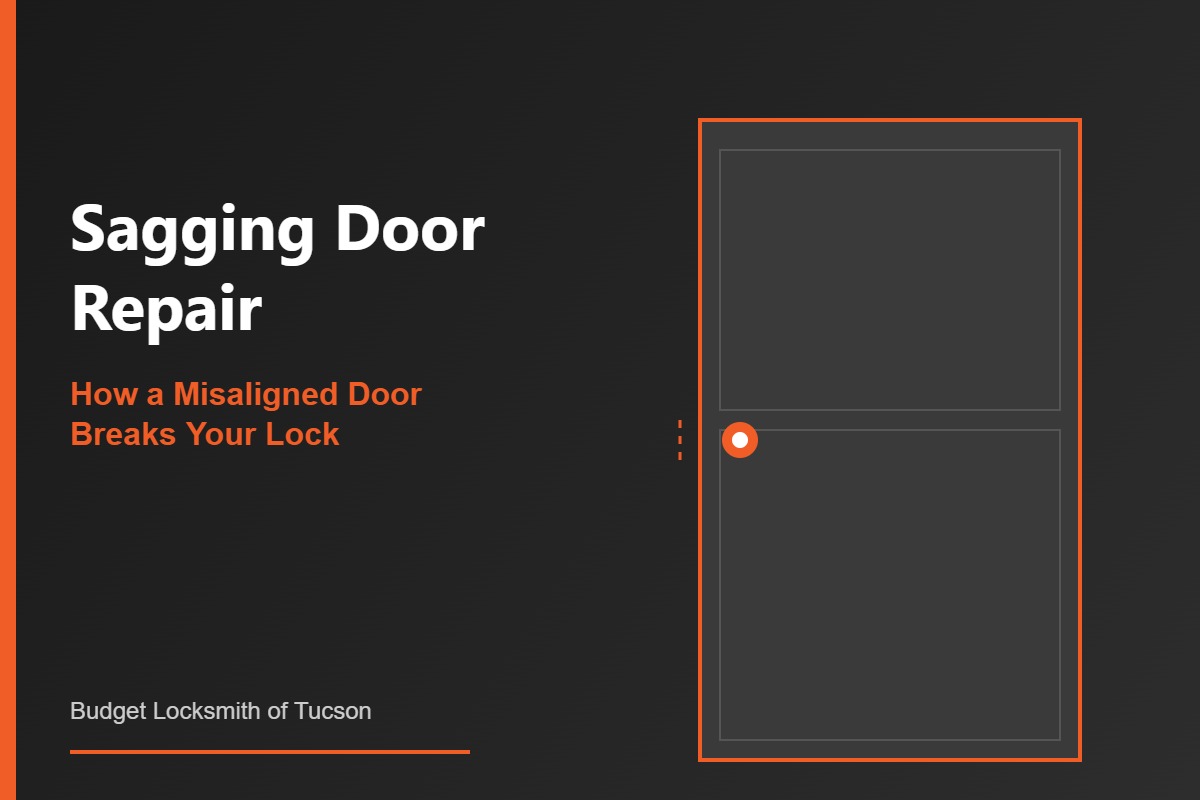
Beyond the lock itself, a sagging door creates several security vulnerabilities that most homeowners never consider. Gaps along the top or side of the door give intruders leverage points to pry. A latch that doesn’t fully engage can be defeated with a credit card. A deadbolt security mechanism that only extends halfway provides almost none of the resistance it was engineered to deliver.
We’ve seen homes in Tucson where the deadbolt looked engaged but was actually catching on the lip of the strike plate — extending less than a quarter inch into the frame. From the outside, the door appeared locked. In reality, a firm shoulder push would have opened it. According to the National Crime Prevention Council, most residential break-ins occur through the front door, and faulty hardware alignment is one of the most common contributing factors.
Diagnosing the Problem: Door, Frame, or Hinge?
Before any sagging door repair begins, the source of the misalignment must be identified. Three common causes exist, each requiring a different solution. A trained technician inspects the gap around the entire door, tests the hinge screws, checks the strike alignment with the bolt extended, and evaluates the door slab for warping. Each finding determines the path forward.
The Hinge Screw Fix
The most common cause of sagging is loose top-hinge screws. The original three-quarter inch screws supplied with most door hinges only bite into the jamb — not the wall stud behind it. Over time they pull loose. Replacing the top two screws on the upper hinge with three-inch wood screws drives the hinge into the framing studs and lifts the entire door back into alignment. This single fix resolves a surprising number of lock issues.
The Strike Plate Adjustment
When the door itself is fine but the deadbolt still drags, the strike plate needs repositioning. A locksmith chisels out the mortise slightly, repositions the plate, and reinforces it with longer screws. A reinforced strike plate adds significant pull-resistance to the door — a major upgrade for deadbolt security.
Pro Tip from the Field
After installing and servicing thousands of residential locks across Tucson, here’s the trick most DIY guides miss: when you replace the top hinge screws, only do one screw at a time. If you remove all three at once, the door drops and the hinge plate shifts, making realignment frustrating. Replace one screw, snug it almost tight, then move to the next. Once all three are seated, do a final tightening pass. The door lifts cleanly and the lock mechanism returns to factory tolerance — usually fixing the thumbturn lock drag without any further work.
We also always check the deadbolt throw distance after alignment. A properly extended bolt should reach a full one inch into the strike pocket. Anything less, and the door’s resistance to forced entry drops dramatically. The American National Standards Institute sets the grade ratings (Grade 1, 2, 3) that define how much force a residential lock should withstand — alignment is what allows your hardware to actually meet those standards.
When to Call a Professional Locksmith
Some alignment problems go beyond what a homeowner should tackle. If the door has been forced, if the cylinder is damaged, if the frame itself has shifted, or if you’re seeing repeated lock failures after a basic adjustment, it’s time for a professional locksmith. A certified technician can rebuild the strike mortise, install a security strike with four-inch screws, replace damaged latch components, and verify the entire locking system meets ANSI Grade 1 or Grade 2 standards.
A full security audit also reveals problems you wouldn’t think to check — hollow frames, weak jamb material, rotted wood behind the trim, or hardware mismatches. These are the issues that turn a minor alignment problem into a security review of your entire entry system.
For homeowners across Tucson, our team handles alignment repairs, strike plate reinforcement, and full lock replacements. We’re located in Tucson and serve the surrounding area — you can find us on Google Maps for directions to our service area.
Frequently Asked Questions
How do I know if my door is misaligned?
Can a misaligned door really break my lock?
Is a sagging door repair something I can do myself?
What’s the difference between a thumbturn lock and a keyed deadbolt?
Will fixing the alignment improve my home safety?
Can a professional locksmith repair the door frame too?
Schedule Your Door and Lock Inspection
A misaligned door is more than an annoyance — it’s an active threat to your home safety and a slow killer of your locks. If your deadbolt is dragging, your door is binding, or your latch isn’t seating fully, don’t wait until the lock fails or someone forces entry. Contact Budget Locksmith of Tucson today to schedule a professional door alignment and security audit. Our experienced technicians will diagnose the issue, restore proper function, and reinforce your entry hardware to current security standards. Visit our Google Business listing to see reviews from Tucson homeowners we’ve helped.